Author: AppsDev iManila

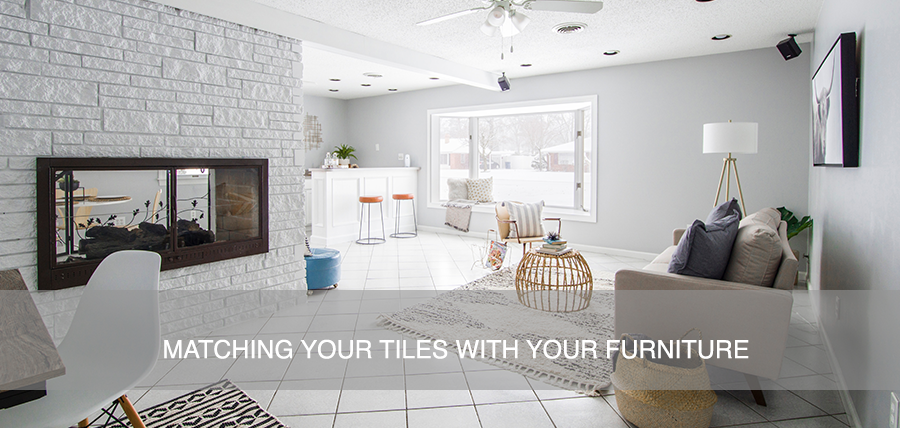
Matching Your Tiles with Your Furniture

Mixing and matching existing furniture with a new set of tiles can be exhausting especially for homeowners with a taste for design and flare. This can especially be frustrating when you have a space and some discontinued furniture that needs replacing. On the other hand, what if you’re also worrying about a budget? 

Below are some fun ways to mix and match furniture with your tiles while staying within a certain number of elements and themes: 

Match colors with patterns and vice versa

If you have solid colored white or beige tiles, top them off with colored furniture to bring some color and vibrancy into the room. 

Using a variety of floor tiles in different patterns and colors can often be an eye explosion if topped with furniture in a variety of colors and patterns. Match colorful floor tiles and patterns with simpler solid colored furniture to let the tiles stand out!

Follow a theme

Are you looking to have a room with an earth tone theme? Pair earth tones such as brown, green and white, with fellow earth tones such as blue. Don’t limit these colors to your floors and furniture, but to your walls as well. 

Are you looking to have a vibrant colored room? If so, look into a variety of patterns or lines on your walls with hues of yellow, red or purple. Simpler colored furniture can bring attention to your walls and floors in this case!

Consider the size of your space

Are you playing with a smaller space? Mirrors are known to make spaces look bigger! Try some mirror subway tiles to add a unique twist to your walls. Mirror subway tiles are of a neutral color and can be used across all room themes. These can easily be paired with any type of furniture. 

Whatever your taste may be, today’s modern world allows us no boundaries in decorating our spaces. We’re no longer limited to lines and solid colors, but as well as patterns, or touches of colors depending on what you feel and what will make you feel most relaxed and at home in your own personal space. 

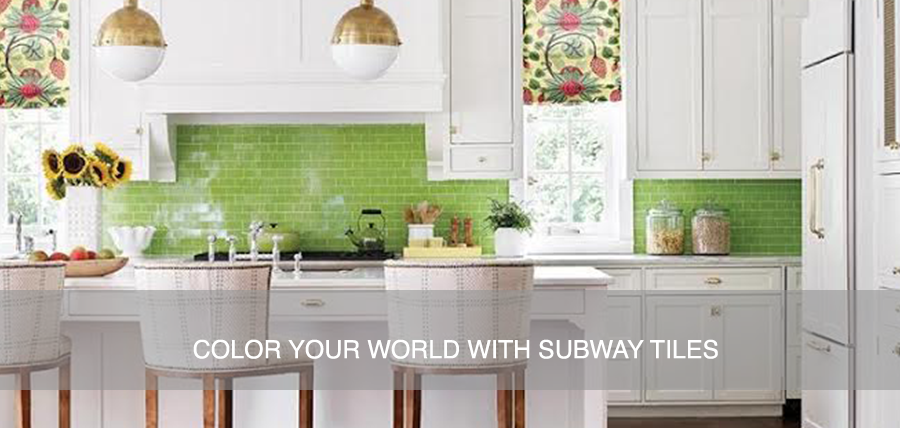
Color Your World with Subway Tiles

In our fast paced world full of stress and technological distractions, companies are being called to improve work spaces by bringing in more vibrant colors and by using unique hues of designs to improve employee morale. These days as well, interior designers and architects alike are using more vibrant materials when designing spaces such as hotel rooms to restaurants to kitchens, even to public toilets. Even young parents have resulted to using all types of materials on their children’s walls, with a variety of colors to enhance their young minds. 

Bold Colors

They say that different colors reflect different types of emotions. The color blue has been often associated with tranquility and calmness, and symbolizes trust, loyalty, wisdom and heaven. While a louder color such as red has often been associated with energy, war, desire and love. However, in some cultures, red can also symbolize good luck and prosperity. Yellow is often a color which symbolizes the sun, and is often tied to joy, happiness and energy. Green is a color that reminds us of money – a reason why it also symbolizes safety and security. 

 .            

Brooklyn Subway Tiles

But designs and colors shouldn’t simply be limited to primary and secondary colors. Today, spaces are decorated with a variety of colors. Gone are the days when the choices are limited to using paint or simple wallpaper designs. Interior designers have long resulted to using a variety of tiles to decorate not just floors, but even walls as well. 

Classic Subway

Subway tiles are one of the latest trends not just for your floors, but for your walls too. Classic and beautiful, subway tiles come in a variety of colors and has become a very popular choice and design element for many homeowners and interior designers. With subway tiles, you can choose to dab your walls with a splash of color in a variety of shapes, lines and patterns any way you wish. The same way tiles are often used on floors, subway tiles are now popularly used to cover entire walls of kitchens and bathrooms as they are easy to clean and highly durable. 


Jewel Bronze and Jewel Base Subway Tiles and Espejo Subway Tiles

So the same way we don’t want to be limited to black and white empty spaces, don’t limit yourself to simple paints or even paintings for your walls. Discover the colorful world of subway tiles and see how much this will make a difference not just in your mood, but also in your day! 

Check out Tile Express’ wide range of unique and classy subway tiles perfect for any home!

Visit www.tileexpressshop.com


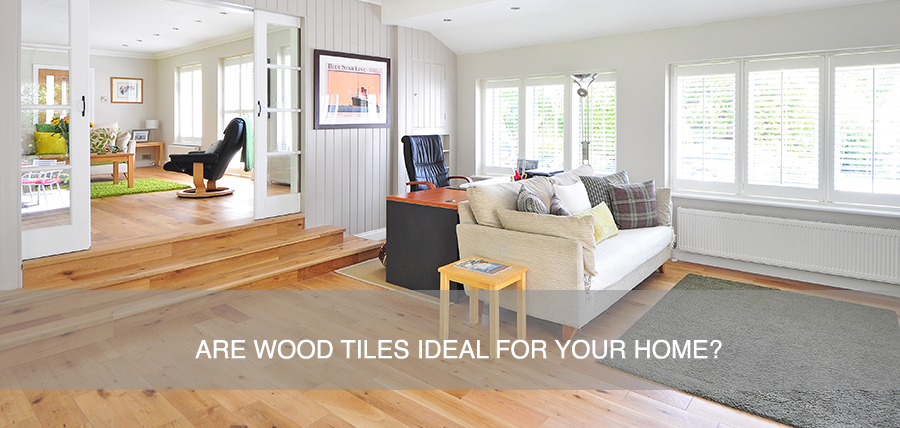
Are Wood Tiles Ideal for Your Home?

One of the hottest trends for home and interior decorators today are wood-like tiles. Manufactured to combine the visual appearance of hardwood and durability of tiles, wood tiles are the perfect choice for users who are looking for the elegance of wood with the added convenience of easy maintenance that tiles have. 

Want to try it out? Here are some tips on how you can use wood tiles to add value, style and comfort to your home:

Choose a lighter shade for a fresh look

For a  modern look, veer away from traditional oak and darkwood hues. Go for a lighter shade like our POPLAR TAN wood tile for a natural finish.


Tile Express, POPLAR TAN wood tile

Use it for bathroom and kitchen floors

One major advantage of wood tiles over traditional hardwood floors is its ability to withstand moisture. This makes it the perfect tile of choice if you want to go for a natural wooden look for high-moisture areas such as your bathroom and kitchen floors. 

Tile Express, POPLAR GRIGIO wood tile

Take it to the wall

Going for a nature-inspired design? Wood tiles offer a rustic charm and versatility that goes well even on wall applications. Use it as an accent wall in your living room, bedroom or basement space for a natural yet elegant look. 

Tile Express, POPLAR CEDAR wood tile

Wood tiles provide the perfect balance of hardwood’s sophistication and the durability and easy maintenance that tiles offer. 

Ready to go shopping for wood tiles? Visit us at Tile Express! 

With over a decade of experience and branches all over the Philippines, Tile Express is the go-to shop for architects, contractors, designers, and customers for all their tile needs. 

To know more about our wide-array of wood tiles and other products, visit our website at https://tileexpressshop.com/products/.


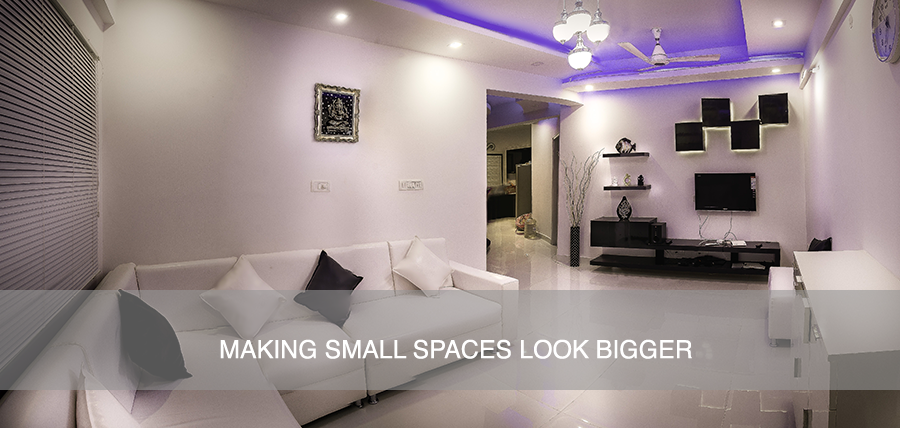
Making Small Spaces Look Bigger

Not everyone has the luxury of space, especially nowadays that people are opting to stay in condos that, while they provide convenience to the homeowner, having a small space is usually inevitable.

But this doesn’t mean that you can’t make the most out of it.

If you find yourself caved in a tiny space, here are some ways to maximise your small area. 

  1. Use light colours on the walls and floor.

Short in space but abundant in lighting? Painting your walls with light shades will make your space look bigger. White/ light coloured walls blend into the shadows that’s why it gives the illusion of a much larger room.

  1. Maximize hidden storage and multi-purpose items

Multi-functional is the way to go!  If you can find a couch that doubles as a storage for your bed linens and other things, then that’s a way to save space. If you can store away your belongings into nice furniture, then it minimises clutter and gives the illusion of more space. 

  1. Opt for larger pieces of furniture

Having a small space doesn’t mean that you also need to have small furniture. Opt for 1 big sofa as compared to having 4 smaller chairs. With this tip, quality overrules quantity, and less is definitely more. 

  1. Mirror, mirror, and more mirror. 

It’s no secret that mirrors are one of the best ways to maximise a small space. Mirrors are best placed on cabinet doors or floor-to-ceiling walls. Floor length mirrors make a room appear taller and horizontal length mirrors make a room appear wider. 

  1. Use large-format tiles

Large-format tiles give the illusion of a wider room. The Calacatta Tiles 60×120 tile is the perfect tiles that gives the illusion of an elongated room. Take it up a notch by laying them out  horizontally slanted to maximise the space even more. 

There are a lot of ways to create the illusion of space to any small room. You just have to be creative enough so you can enjoy even if you have a small space. 

If you’re looking for tiles to decorate a small space, you may check out our wide range of designer tiles at www.tileexpressshop.com

How to Mix and Match Mosaic and Tiles

One of the most effective ways to transform your plain, boring looking home into an impressive, stylish one is through the use of tiles!

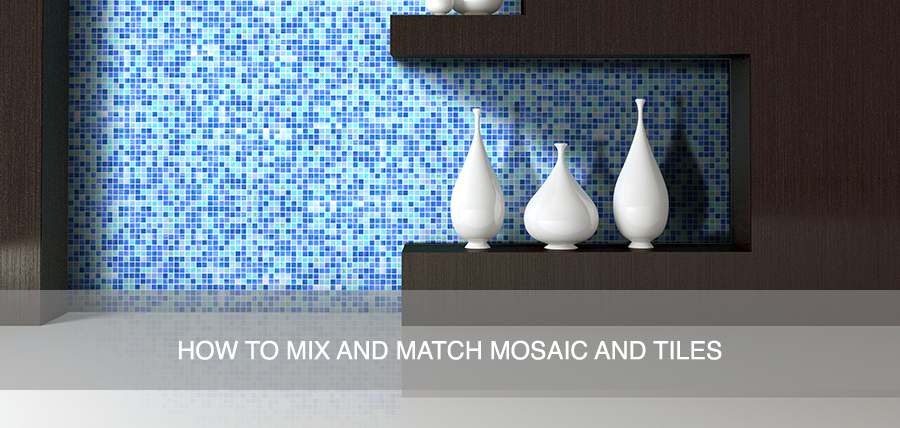
Whether it’s for your kitchen, living room or bathroom, tiles can provide the “wow” factor to every home. One popular trend for interior designers today is mixing and matching mosaics with classic tiles. Mosaics, often made by combining various materials from glass, ceramic, natural stone, etc., works great in highlighting and making an area of your home stand out.

Here are some tips from our experts at Tile Express on how you can mix and match mosaic and classic tiles for your home:

Balance busy patterns with plain tiles

One common design mistake when using mosaics, is overdoing it. As it is with all forms of art, there should be balance in installing tiles for your home. Contain the use of patterned mosaics into one surface (either a portion of your floor or an accent wall) and pair it with plain tiles to make it pop out.

Make mosaics standout with neutral colored tiles

For an elegant and classy look, make your mosaics the focal point by matching it with neutral colored tiles. The last thing that you want to happen is to overshadow your mosaics with bright, loud colored tiles.

Combine matte and glossy tiles

Monochromatic colors make the room look elegant and cohesive. But, doing it incorrectly may result in your place looking flat and unappealing. To make a contrasting effect without breaking up your color scheme, you can use matte tiles together with your polished mosaics. This will make your mosaics appear tactile and more visually interesting.

Ready to shop for tiles? Check out our wide collection of tiles at https://tileexpressshop.com/products/

Design Your Bathroom for Less

Nothing is more relaxing than a warm bath after a long exhausting day. But, do you know what can make it even better? A clean and good-looking bathroom. But some people may think that renovation is a bit costly and not everyone can afford it.

Luckily we found cheap solutions to make your bathroom look fancier and pleasing to the eye so that you can truly enjoy your “me” time!

1. SWITCH IT UP!

Throw away empty containers and trade in your cheap plastic bottles of shampoo and shower gels for glass containers.  Transfer their content in clear bottles or containers to immediately amp up your bathroom. This is also an efficient way of tracking how much stuff you have left so you wouldn’t run out of shampoo at the most inconvenient time!

2. MIRROR, MIRROR, ON THE WALL

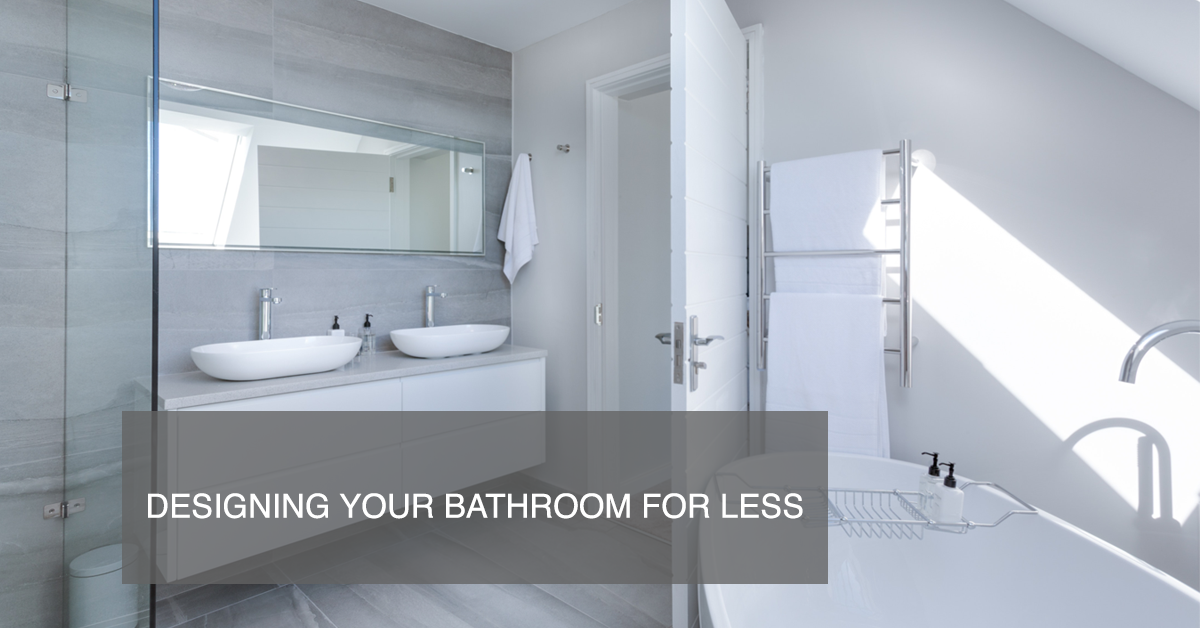
Invest in large mirrors or mirrors with interesting shapes as this will add depth to your bathroom. Yes, big mirrors can be a bit expensive but it is still a lot cheaper than renovating the entire room. You can also use mosaics for the wall to add space and drama. The Katharine Mosaic Tiles is perfect for this kind of effect.

3. FIND THE PALETTE THAT SUITS YOUR PALATE

White on white color scheme is the safest way to make your bathroom look more polished and spacious. It also reflects light and will make your bathroom appear brighter. But, if you prefer a bit of life in your bathroom but unsure of which colors go together, you can always opt for the neutral tones. Warm beige, soft grays, or even faint hues of pastel colors. The Serpeggiante Grigio tiles has warm tones that can complement your choice of color.

4. UPGRADE YOUR TILES TO A LARGER SIZE

Instead of removing your vanity or tearing your cabinets to add space, you can just use large format tiles to make your bathroom visually bigger. Blending the tiles from one area to another continuously will also make the room more refined. SL Travertine a large format tile is perfect in giving this kind of illusion.


Tile Express joins Worldbex 2019

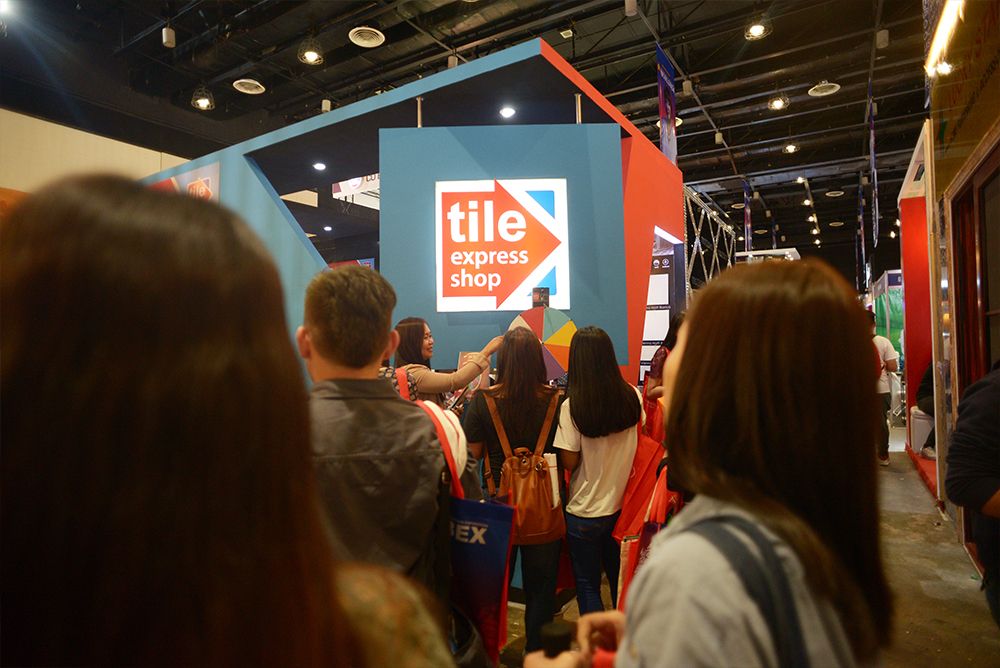
Tile Express Shop once again joined Worldbex 2019, simultaneously held at the World Trade Center and the SMX Convention Center.  The five-day event, with its theme “A World Built Bolder, had a full house from March 13-17. Visitors from the architecture, construction, engineering and interior design industries had a chance to interact with the more than 700 local and international exhibitors.

The Tile Express booth was located at the World Trade Center building. A bigger booth was put up for this year to accommodate more people and to present our newest products to the visitors. New tiles were showcased, the Pasadena series, a 60×120 cm with 11mm thickness, 3D inkjet printed and in Matte finish, great for achieving that spacious look both for indoor and outdoor.

A new product line was also launched, the Vivari Sanitary Ware. The brand carries a luxurious design of water closets, urinals, wash basin, shower and bathroom accessories. It is manufactured using Italian standard and technology, known for high quality and innovation. Visit our showrooms to see more of this new collection.

Tile Express would like to thank everyone who visited the booth. We hope to bring more design and product innovations in the next Worldbex event!

FREQUENTLY ASKED QUESTIONS

What size of tiles do I need?

The size of tiles you need will depend on the size of the room, the size of the area being tiled and your personal preferences. Large tiles in small rooms can make the space look bigger. With a larger tile, grout lines are less frequent, while using small tiles on large areas can be impractical from a fitting point of view. Rectangular, sheet and mosaic tiles are all available in a range of different sizes.

How many tiles do I need?

When calculating how many tiles you need, measure the area and add an extra 10% (or a little more if you’re doing a patterned border). This way, you’re allowing for breakages, cutting, waste and pattern matching.

Do tiles need to be sealed?

Ceramics, glass and metal don’t need to be sealed after fixing, but some natural stone products do. Natural stone sealer seals the tiles’ natural porous surface to stop it staining and prevent water damage, making it especially important in areas like the kitchen and bathroom.

How to maintain tiles in good condition?

Even after the project is completed, it is important to maintain your tiles so that they remain in excellent condition. Always check the packaging for specific maintenance advice, as not all maintenance methods are suitable for every tile type, and some can even damage certain tiles. Be sure to clean all spillages on floor tiles to reduce the risk of injury, and use absorbent mats in areas around baths and showers where possible. Mats should also be used at any external doorways to protect the tiles from damage caused by debris transfer from outside.

GUIDE IN BUYING TILES

Ceramic Tiles

Ceramic tiles are the most popular choice in tiling. A key benefit of ceramic tiles is that they don’t need to be sealed after they’ve been fixed in place. They are available in a huge range of designs, colours and effects, as well as a variety of sizes. They are a cost effective tile choice as they are easy to maintain and clean. Ceramic tiles are are recommended for light traffic areas, such as cloakrooms and bathrooms.

Porcelain Tiles

Made in a similar way to ceramic tiles, porcelain tiles are more durable and hard-wearing and are therefore suitable for more heavy traffic areas, such as kitchens and living rooms. Porcelain can be finished either glazed, unglazed or polished.

Mosaics

Mosaic tiles can be made of any material and come in sheets containing many smaller tiles, so you can mix and match them to create your own design.

INSTALLATION GUIDE

A clean, precise tile installation is easier than you might think. With planning, preparation, and our step-by-step advice, you can do it on your own.

Step 1: Prepare the surface

Make sure your surfaces are clean, smooth, and dry for best results. Take time to repair, patch, and level any damaged or uneven areas.  Double check to make sure the surface is structurally sound and the area of wax, soap scum and grease.

Remove any moldings, trim, or appliances that may interfere with tile application, and check the doorjambs to make sure tile has clearance when installed beneath. Identifying these potential complications in advance will help your installation run smoothly.

Step 2: Begin Your Layout

For an efficient layout, start by marking the center point of each of the walls in the room. Next, snap chalk lines between the center points of opposite walls to pinpoint the center of the room. Make any necessary adjustments to ensure that the intersection creates perfect squares. Starting at the center point, lay a row of loose tiles along the center lines in both directions, using tile spacers as you go to for even, uniform joints.

Once you reach the walls, you’ll need to cut tiles for a proper fit. If the cuts needed are smaller than half of a tile, you can adjust the center line by snapping a new line a half tile size closer to the wall.

If necessary, repeat this step along the intersecting center line for a precise design. To make a large room more manageable, divide each section into smaller 2′ x 3′ grids by snapping additional lines parallel to the center lines.

Step 3: Apply the adhesive

As a general rule of thumb, be mindful to mix only enough of the adhesive to be used within 30 minutes.  Using the flat side of the trowel type recommended on the adhesive package, spread a 1/4″ coat on the surface of one grid area without covering the guidelines.

After doing so, hold the trowel at a 45 degree angle and use the notched side to comb adhesive into standing ridges.
When you remove the excess adhesive, you leave behind a uniform, ridged setting bed for your tile. As another rule of thumb, do not spread a larger area of your adhesive than can be set in 15 minutes. Stick to the script and facilitate your tile installation with the perfect adhesive application.

Step 4: Cut tile as needed

Start by marking carefully measured cuts-to-be with a pencil or felt tip pen on the tile surface. You can use a tile cutter to achieve pinpoint straight or diagonal cuts. Make masterful curved cuts with a nipper, chipping away small pieces for best results.

For any full length curved cuts, a rod saw is most properly suited to handle the task. After your cuts are made, smooth out any sharp edges with a carborundum stone to give a soft finish to your tile.

Step 5: Set your tile

Now that you’ve primed the surface, created the layout, applied the adhesive, and cut the tile, you are fully prepared for the actual installation of your tile.

Begin by installing tiles in the center of the room, one grid at a time, finishing each grid before moving to the next. Within each grid, it will help to start with the first tile in the corner and work outward. Using a slight twisting motion, set tiles one at a time and avoid sliding them into place. Be sure to either insert spacers as each tile is set or leave equal joints between tiles.

Save the perimeter tiles in each grid for last, leaving a gap between the tile and wall. Once a grid is completely installed, tap in all tiles with a rubber mallet or hammer and wood block to ensure a solid bond and level plane. Remove excess adhesive from joints with a putty knife and from tile with a damp sponge to prevent an uneven appearance.

Lastly, allow your hard work at least 24 hours to set before walking on it. And of course, take at least 20 minutes to admire the time and care you have put in to your new floor!

Step 6: Grouting Joints

Now that your tile is in place and has had 24 hours to set, your last Step is to “grout” or fill the joints and consolidate your floor into one mass. After carefully reading and following all instructions and precautions on the grout package, make only enough to use in a 30 minute period. As you remove the tile spacers and spread grout on the tile surface, use a rubber grout float or a squeegee to force it down into the joints.

Tilt the float at a 45 degree angle and with the edge of the float, remove the excess grout from the surface immediately. Now tilt the float at a 90-degree angle and scrape it diagonally across the tiles.

Once you’ve let the grout set slightly for around 15 to 20 minutes, use a damp sponge to clean any residue from the
surface and smooth the grout joints. Make sure to rinse your sponge frequently and change the water when needed.
Polish with a soft cloth when the grout has dried and haze forms on the tile surface, and rinse again with sponge and clean water if necessary. Give your newly grouted floor 72 hours before any heavy use and at least three weeks before applying sealers or polishes.

Take a deep breath and let out sigh of relief; you have just completed your floor with 

Tile Express Shop Tiles.